For many Christians today, demonstrating concern for animals and choosing cruelty-free meals can feel isolating. But these values are far from new or novel. From Christianity’s earliest days, church leaders, saints, monks, reformers, pastors, and entire faith communities have shared a conviction that is as relevant today as ever: Animals matter to God.
In the Beginning: God’s Cruelty-Free Paradise
The Bible’s first description of food contains no slaughterhouses, butcher knives, or fishing nets. What it does contain is God’s vision for harmony between humans and other animals:
“I give you every seed-bearing plant on the face of the whole earth and every tree that has fruit with seed in it. They will be yours for food. And to all the beasts of the earth and all the birds in the sky and all the creatures that move along the ground—everything that has the breath of life in it—I give every green plant for food.” And it was so. — Genesis 1:29-30
The prophet Isaiah foretold that in the future peaceable kingdom, when the world is restored to that vision, animals will have nothing more to fear, and violence and bloodshed will end (Isaiah 11:6–9). Many people of faith who wish to live as God intended have chosen not to wait, but to reject violence and bloodshed in their daily lives.
Apostolic Appetites
One of the most important figures in the early church was James the Just, the brother of Jesus and leader of the church in Jerusalem. Ancient writings consistently state that James was vegetarian. Second-century chronicler Hegesippus detailed the life of James, his accounts preserved by historian Eusebius. Eusebius writes in his Ecclesiastical History, II. xxiii., “He was called the ‘Just’ by all men from the Lord’s time to ours, since many are called James, but he was holy from his mother’s womb. He drank no wine or strong drink, nor did he eat flesh…” Because historical texts note that James had been raised vegetarian from birth, many religious scholars have concluded that it stands to reason that Jesus was also raised vegetarian. There is no recorded account of Jesus eating land animals, and mentions of Him eating fish are contradictory. For a deeper discussion, see PETA LAMBS’ exploration of this topic. In Matthew 9:13, Jesus rejects animal sacrifices, stating, “I desire mercy, not sacrifice.”
Texts from the 4th-century Christian writer Epiphanius, as well as the Gospels of Mark and Matthew, note that Jesus’ cousin and close friend, John the Baptist, did not eat animal flesh, except for locusts in the desert —though some scholars believe that “locusts” referred to locust (carob) beans. Other ancient documents suggest that many of the apostles also eschewed meat. The Clementine Homilies, a second-century work based on the teachings of St. Peter, state of Thomas, “He continually fasts and prays, and abstaining from the eating of flesh…” The Homilies continue, “…The Apostle Matthew partook of seeds, and nuts, hard-shelled fruits, and vegetables, without flesh.” Peter is quoted as saying, “I live on olives and bread, to which I rarely only add vegetables…”
Paul’s letters show that the question of whether followers of Christ should eat animals was a serious point of debate among early Jewish-Christian communities. Many, including the Nazarenes and the Ebionites, opposed eating flesh and were vocal opponents of animal sacrifice. The Ebionites held that to eat “dead flesh” was to eat at the table of demons.
As the Jesus movement spread into the wider Roman world, some practices (such as animal-free eating and circumcision) were softened or set aside in order to reach new converts. But the persistence of these early vegetarian communities shows that compassion for animals was not absent from Christianity—it was part of the conversation from the beginning.
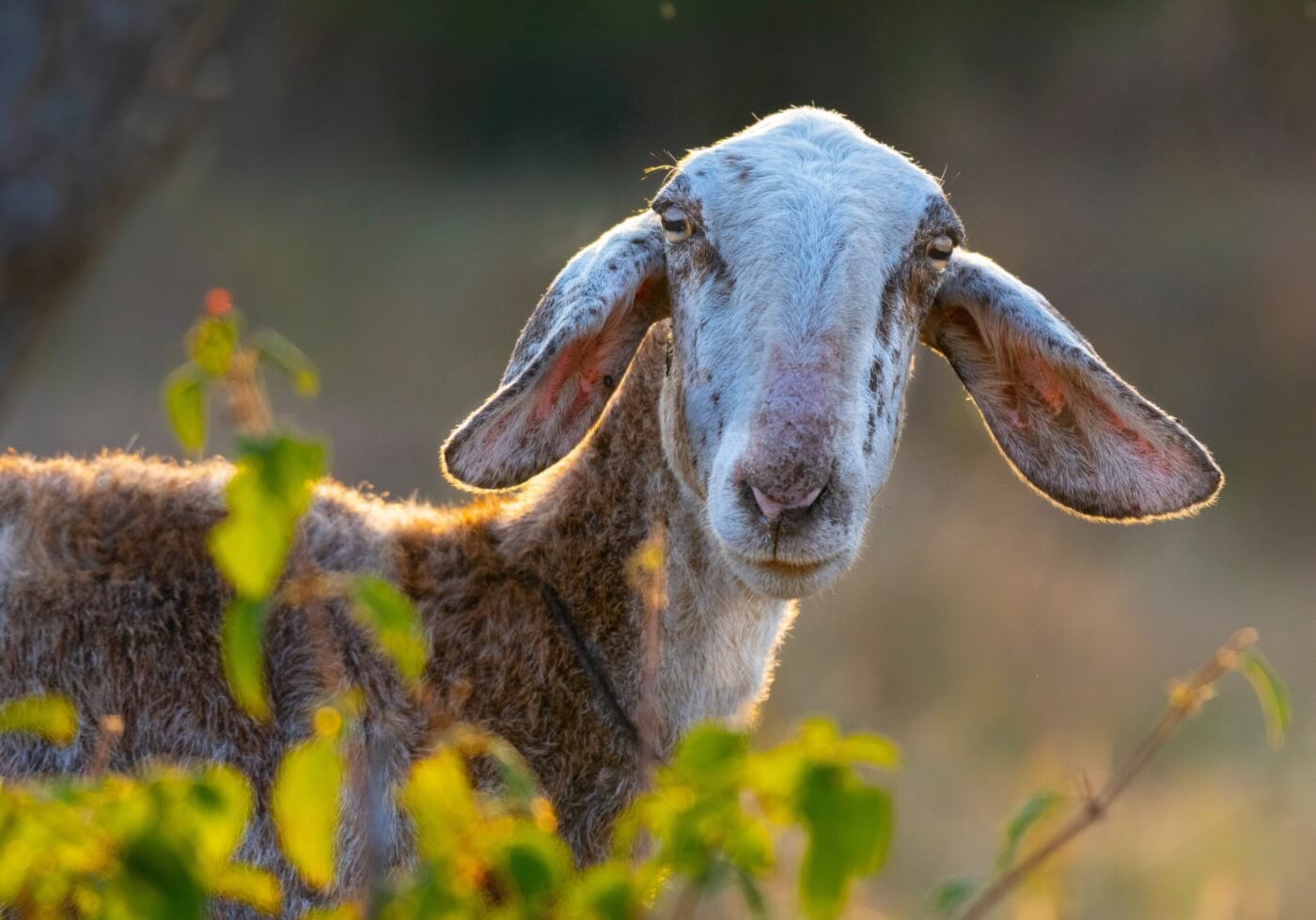
Saints Preserve Us (The Animals)
In the centuries that followed, prominent saints continued to practice and encourage mercy toward animals, and many early monks chose simple diets that excluded meat. St. Basil the Great, one of the most influential bishops in Christian history, prayed:
“O God, enlarge within us the sense of fellowship with all living things, our brothers the animals to whom thou has given the earth as their home in common with us. We remember with shame that in the past we have exercised the high dominion of man with ruthless cruelty, so that the voice of the earth, which should have gone up to Thee in song, has been a groan of travail. May we realise that they live, not for us alone, but for themselves and for Thee, and that they love the sweetness of life.”
Often named as the greatest preacher in the history of Christianity, St. John Chrysostom, a bishop of Constantinople, taught that holiness necessitated kindness to animals, writing, “Surely we ought to show them great kindness and gentleness for many reasons, but above all, because they are the same origin as ourselves.”
Many saints are remembered not only for the values they taught but for how they treated the animals they encountered. St. Anthony the Great is commonly depicted with a pig after reportedly healing a suffering wild pig who then lived with him in the desert. Lovingly referred to as the church’s original “cat lady,” St. Gertrude of Nivelles cared for the cats who visited her monastery, along with widows, orphans, and others in need.
Others spoke more bluntly. St. Clement of Alexandria wrote:
“It is far better to be happy than to have your bodies act as graveyards for animals. … The unnatural eating of flesh meats is as polluting as the heathen worship of devils, with its sacrifices and its impure feasts, through participation in it a man becomes a fellow eater with devils.”
In other corners of Christian history, abstaining from animal flesh became part of a broader discipline of selfless devotion and peacemaking. St. Jerome, Origen of Alexandria, Tertullian, St. Clare of Assisi, and countless others embraced vegetarian eating as a way to draw closer to God.
St. Francis of Paola performed numerous miracles, including resurrecting a lamb and a fish who had been killed for food. His order, the Minims, took a vow of nonviolence, refusing to eat animals or participate in any practice that would cause them to suffer.
In monasteries across Europe and the Middle East, generations of believers relied on grains, beans, vegetables, fruits, nuts, and other plant foods for nourishment and spiritual fulfillment, including the Benedictines and Cistercians.
Protestants, Peacemakers, and Plants
John Wesley, the founder of Methodism, spoke out against bull-baiting, cockfighting, horse racing, and hunting, and urged Christians to stop eating animals:
“I believe in my heart that faith in Jesus Christ can and will lead us beyond an exclusive concern for the well-being of other human beings to the broader concern for the well-being of the birds in our backyards, the fish in our rivers, and every living creature on the face of this earth .”
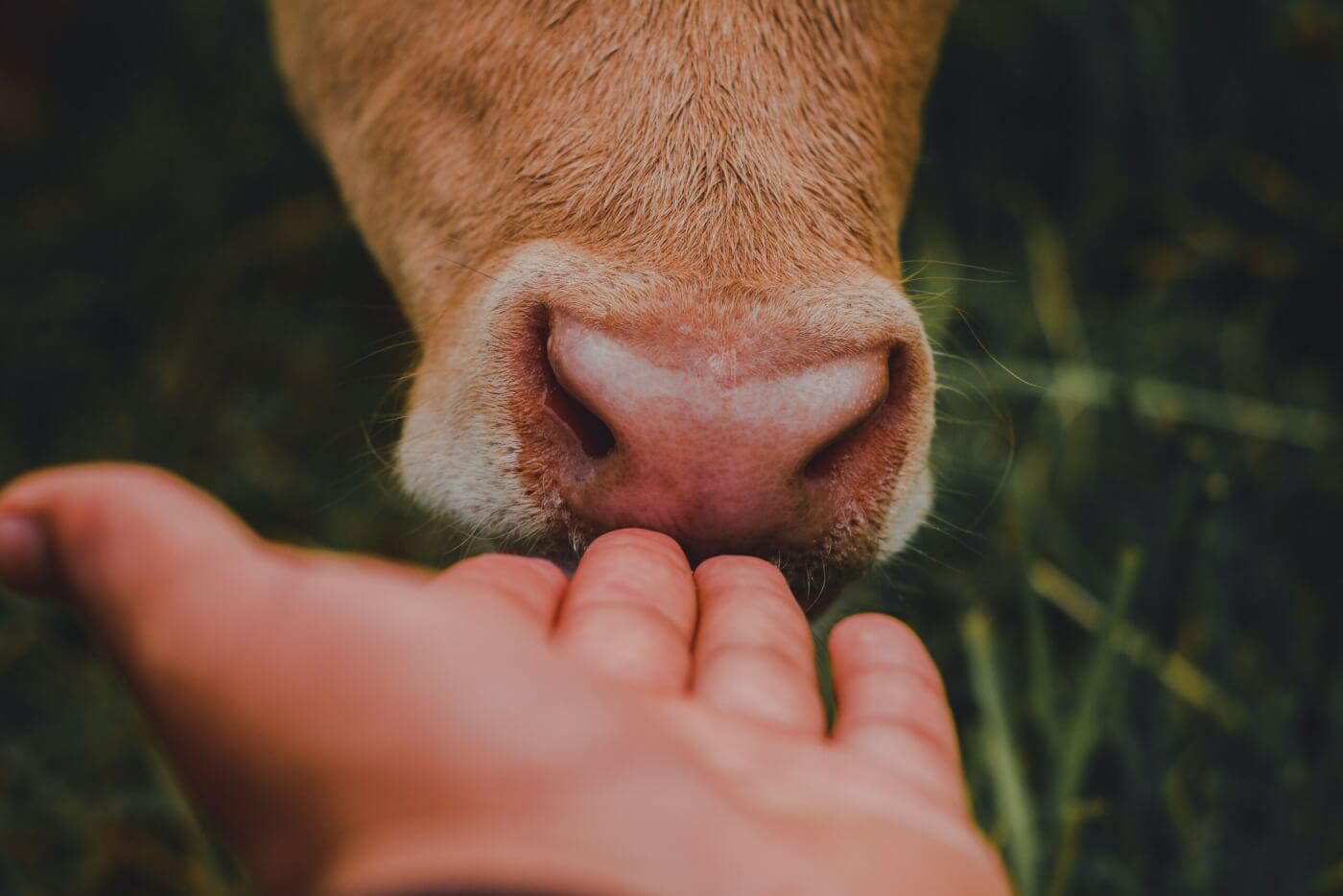
Other reformers saw cruelty to animals as part of a larger moral failure. Many Quakers, including Benjamin Lay, Anthony Benezet, and Joshua Evans, were avowed vegetarians in addition to being among the first abolitionists. Later Quaker leaders, such as Alice Paul, were key figures in the women’s rights movement. In 1902, the church established the Friends Vegetarian Society.
The Quakers also helped create Britain’s Vegetarian Society, together with the Rev. William Cowherd and England’s first vegetarian church, the Bible Christian Church. A few years later, in 1865, William and Catherine Booth co-founded the Salvation Army—originally called the East London Christian Mission—to aid impoverished and marginalized populations. The Booth family’s compassion extended to all oppressed individuals: They advocated for vegetarian eating consistent with Christian ethics.
The same thread runs through later Christian reformers: Seventh-day Adventist Church founder Ellen G. White urged healthful, compassionate living; missionary doctor and Nobel Peace Prize winner Albert Schweitzer called for “reverence for life;” and Leo Tolstoy saw refusing to harm animals as a testament to moral growth and a desire to do good. He wrote, “If a man aspires towards a righteous life, his first act of abstinence is from injury to animals.”
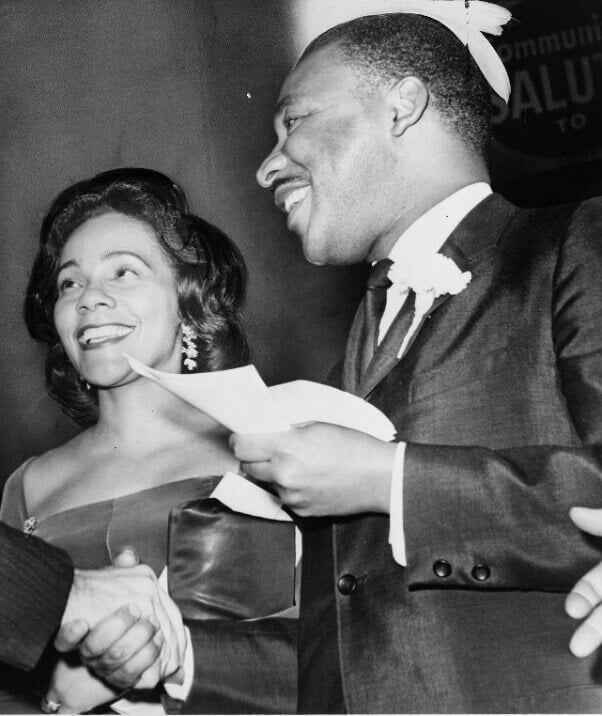
The tradition is still alive. In recent generations, Christian leaders have continued to heed God’s call to care for creation. Fred Rogers, an ordained Presbyterian minister, famously extended his gentle ethic to animals. Coretta Scott King and Dexter Scott King embraced vegan living as an extension of Rev. Dr. Martin Luther King, Jr.’s philosophy of nonviolence. Groups such as The Christian Vegetarian Association, Root & Branch, and the Christian Vegans and Vegetarians Facebook group connect and support people of faith around the world.
This chronology is by no means exhaustive. Across centuries, denominations, and cultures, Christian voices have proclaimed that Christlike mercy must extend beyond our own species. For Christians seeking a life of compassion, sparing animals from our plates is not a departure from faith but a return to one of its deepest truths: Blessed are the merciful.